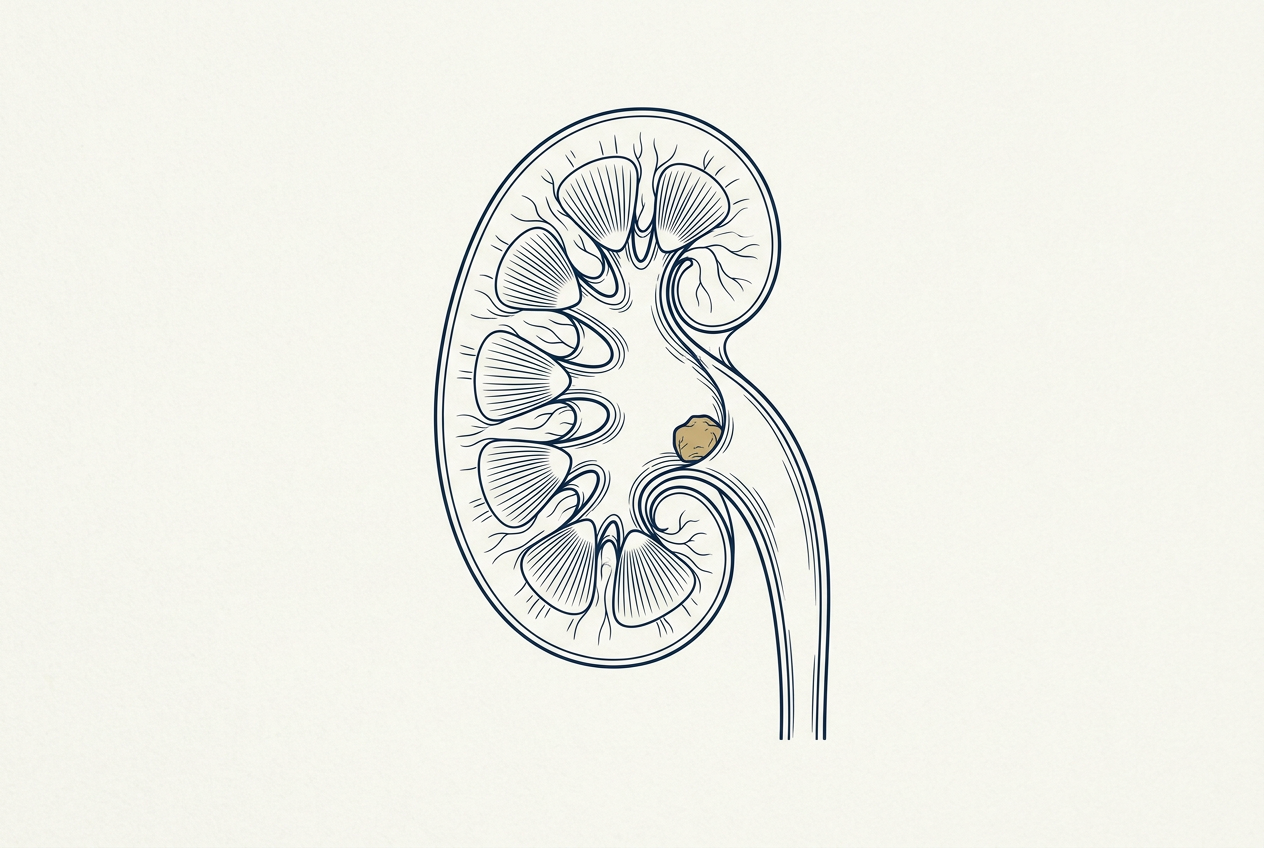
Toughing out kidney stone attacks at home is admirable and expensive. The rating is arithmetic: procedures counted in twelve month windows and colic attacks documented in emergency records. Pain the record never saw cannot be counted, and the difference between an occasional attack and a procedure count above two per year is the difference between 10 and 30 percent.
How VA rates kidney stones
Kidney stones are rated under diagnostic code 7508 (nephrolithiasis, ureterolithiasis, and nephrocalcinosis) in the genitourinary schedule (38 CFR 4.115b). The code is one sentence with one big exception: rate as hydronephrosis, except recurrent stone formation requiring invasive or non-invasive procedures more than two times per year rates 30 percent.
The procedure counter: the 30 percent path
"Invasive or non-invasive procedures" covers the whole urology toolkit: shock wave lithotripsy (ESWL), ureteroscopy with laser fragmentation, stent placement, and percutaneous nephrolithotomy. More than two of these in a twelve month span puts the 30 percent exception in play. The evidence is arithmetic: keep every operative and procedure report, with dates, and count them by twelve month windows. Emergency room records count too when a procedure was done.
The hydronephrosis lanes (10 to 30 percent)
Without the procedure count, stones rate on the hydronephrosis criteria under DC 7509:
| Rating | Criteria |
|---|---|
| 30 percent | Frequent attacks of colic with infection (pyonephrosis) and impaired kidney function |
| 20 percent | Frequent attacks of colic requiring catheter drainage |
| 10 percent | An occasional attack of colic, not infected and not requiring catheter drainage |
Severe cases move off this ladder entirely and rate as renal dysfunction. "Colic" is the crushing flank pain of a passing stone; every emergency room visit for it is evidence of frequency, so do not manage stone attacks at home off the record.
When stones damage the kidney: renal dysfunction
Obstructing stones and repeated infections can permanently reduce kidney function, and the renal dysfunction criteria (38 CFR 4.115a) now run on lab values: chronic kidney disease is rated 30, 60, 80, or 100 percent by glomerular filtration rate bands (GFR 45 to 59, 30 to 44, 15 to 29, and below 15 or dialysis), each requiring three consecutive months of readings during the past year. If you have had recurring stones for years, ask your provider for your eGFR trend; a declining number changes which criteria apply.
Strictures after stones: the DC 7511 detail
Stones scar ureters, and ureteral strictures have their own code with a broader exception than 7508. Under DC 7511, recurrent stone formation requiring diet therapy, drug therapy, or procedures more than twice a year rates 30 percent. Read that again: for a stricture history, any prescribed pharmacologic prevention regimen qualifies as drug therapy, whether that is potassium citrate, thiazides, allopurinol, magnesium supplements, or another agent a provider has prescribed, and a formal dietary program qualifies as diet therapy. Veterans with documented strictures and a prevention prescription should ask which code their rating sits under.
Service connection theories
Direct service connection is straightforward when stones first appeared in service; the recurrence pattern does the rest. Commonly argued secondary theories under 38 CFR 3.310 include stones tied to service-connected gout and hyperuricemia, medications that alter urine chemistry, and chronic dehydration in desert deployments. All of them live or die on a medical nexus opinion, so treat the theory as a question for a clinician, not a box on a form.
Common rating details veterans overlook
- Count procedures by twelve month windows and keep every report; more than two per year is 30 percent.
- Go to the ER for colic and let the record show the frequency.
- Ask for your eGFR and creatinine trends; kidney damage moves the claim to higher criteria.
- Recurrent infections have their own ladder (urinary tract infection criteria under 38 CFR 4.115a).
- A prevention prescription matters, especially when strictures put DC 7511 in play.