Gout is rated by measuring a joint that usually feels fine on exam day. That is exactly why so many gout claims come back underrated: the flares happen between appointments. And the most commonly missed gout claim has nothing to do with diet. Thiazide water pills prescribed for service-connected hypertension raise uric acid, making gout a textbook secondary claim that routinely never gets filed.
How VA rates gout
Gout is diagnostic code 5017 in 38 CFR 4.71a, and the current rule is short: under the note to diagnostic codes 5013 through 5024, gout is evaluated as degenerative arthritis, based on limitation of motion of the affected parts. That one sentence is the product of a February 7, 2021 rewrite that quietly changed how every gout claim is rated. Knowing both the old and new versions matters.
What the 2021 change did
Before February 7, 2021, gout was rated under the active process criteria of DC 5002, which ran from 20 percent all the way to 100 percent for totally incapacitating disease with constitutional symptoms. The rewrite removed gout from 5002 by name (the code now literally says "except post-traumatic and gout") and sent it to the limitation of motion pathway. Two consequences:
- Claims pending before February 7, 2021 get whichever version is more favorable.
- Ratings granted under the old 5002 criteria do not vanish; reductions must follow the ordinary protection rules, including the exam and notice procedures of 38 CFR 3.105(e) and the stabilization protections of 3.344.
How the limitation of motion math works
Under the degenerative arthritis mechanics of DC 5003, each affected joint is measured:
| Situation | Rating |
|---|---|
| Limitation of motion that is compensable under the joint's own code | Rate under that code, per joint |
| Limitation of motion that is noncompensable, but objectively confirmed (swelling, muscle spasm, painful motion) | 10 percent per major joint or minor joint group, combined |
| No limitation of motion, X-ray involvement of 2 or more major joints or minor joint groups, with occasional incapacitating exacerbations | 20 percent |
| No limitation of motion, X-ray involvement of 2 or more major joints or minor joint groups | 10 percent |
Each rated joint combines under 38 CFR 4.25, and matching joints on both sides bring the bilateral factor of 38 CFR 4.26. A veteran with gout in both big toes and one knee is not chasing one rating. That is three.
The painful motion floor
38 CFR 4.59 is the gout claimant's best friend. Joints that are actually painful on motion are entitled to at least the minimum compensable rating for that joint, even when the measured range of motion looks normal on exam day. Gout between flares often moves fine but hurts. Say so at the exam, and make sure the examiner records pain on motion, where it starts, and what it prevents.
The flare problem, and how to beat it
Gout is episodic, and C&P exams are almost never scheduled during a flare. VA's own examination rules require the examiner to estimate functional loss during flare-ups, not just measure the quiet joint in the office. Build the record the exam cannot see: dated photos of the swollen joint, urgent care and podiatry notes from flares, refill histories for any gout medications including colchicine, prednisone, indomethacin, allopurinol, and febuxostat, and a flare log with dates, joints involved, and days lost. If the examiner does not address flare-ups, that is a specific, correctable exam inadequacy.
The secondary connection most veterans miss
Gout is driven by uric acid, and one of the most common causes of elevated uric acid is thiazide diuretics, the water pills (hydrochlorothiazide and relatives) that treat hypertension. A veteran whose service-connected hypertension is managed with a thiazide and who later develops gout has a textbook secondary claim under 38 CFR 3.310, supported by mainstream medical literature. Kidney disease, another common service-connected condition, does the same thing. These medication-pathway claims are routinely never filed.
Common rating details veterans overlook
- Tophi and kidney involvement are separate. Uric acid kidney stones and gouty kidney disease are rated under the genitourinary schedule and combine with the joint ratings.
- Get the diagnosis on X-ray or labs. The 20 and 10 percent no-limitation levels require X-ray involvement, and a documented uric acid history, synovial fluid analysis showing urate crystals, or imaging findings such as ultrasound or DECT scan all anchor the diagnosis. Multiple forms of objective evidence strengthen the record.
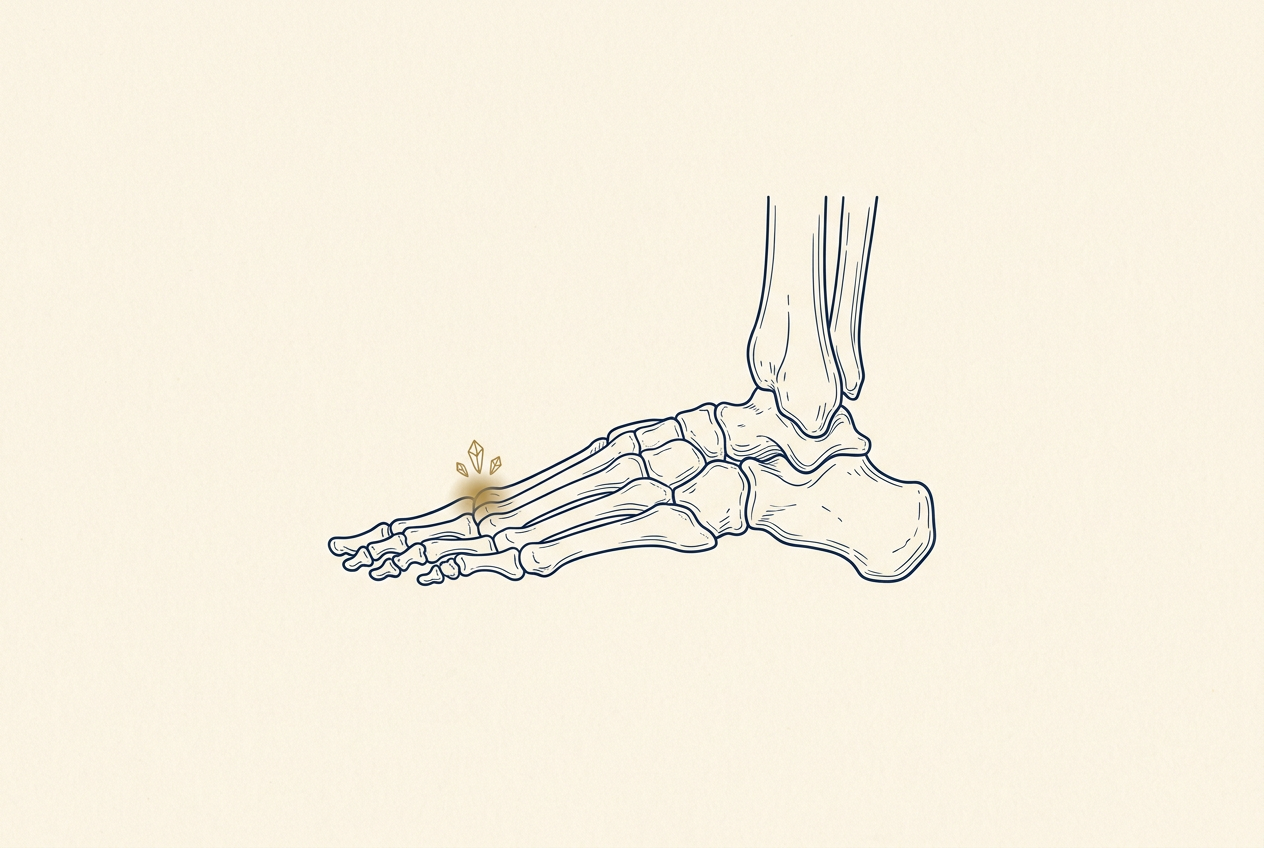
- The big toe counts. Podagra in the first metatarsophalangeal joint is a classic gout site. Painful motion there carries a compensable rating under 4.59 even when walking looks normal.
- Diet lectures are not a defense. Service connection follows the medical evidence. There is no willful misconduct bar for a diet-influenced disease.