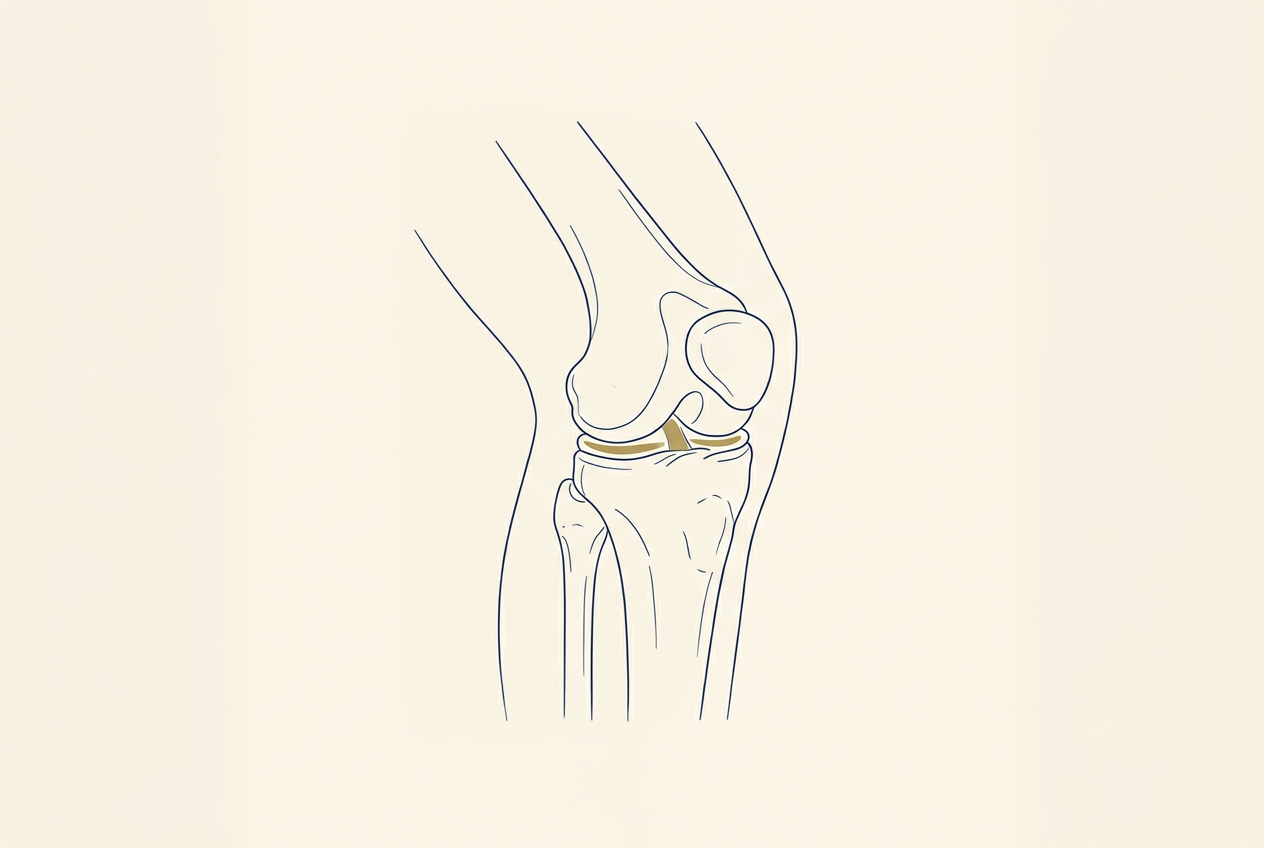
Arthritis is not one rating, and treating it as one is how veterans get underpaid. DC 5003 is a set of routing instructions that sends every affected joint to its own motion criteria, with a 10 percent floor for a joint that is painful even when the measurements look normal. Three arthritic joints are three ratings that combine, not one diagnosis with one number.
How VA rates arthritis
Degenerative arthritis (osteoarthritis) is rated under diagnostic code 5003 in the musculoskeletal schedule (38 CFR 4.71a). The code itself is short, but it works differently from most: DC 5003 sends each affected joint to its own limitation of motion criteria. Post-traumatic arthritis has its own code (DC 5010) with the same approach, and inflammatory types such as rheumatoid arthritis are rated as an active disease process under DC 5002, with chronic residuals returning to DC 5003.
The rating logic, step by step
- X-ray evidence establishes the arthritis. Degenerative arthritis must be established by X-ray findings.
- Each joint is rated on its limitation of motion under the diagnostic code for that joint (knee, hip, shoulder, spine, and so on).
- If motion is limited but not enough to be compensable, VA assigns 10 percent for each major joint or group of minor joints affected, as long as the limitation is objectively confirmed by findings such as swelling, muscle spasm, or satisfactory evidence of painful motion.
- If there is no limitation of motion at all, X-ray involvement of 2 or more major joints or minor joint groups earns 10 percent, or 20 percent with occasional incapacitating exacerbations. These X-ray based ratings cannot be combined with ratings based on limitation of motion.
Painful motion has a 10 percent floor
The painful motion rule (38 CFR 4.59) says that actually painful joints are entitled to at least the minimum compensable rating for that joint. If your knee aches through its full range of motion, that pain alone supports 10 percent even though the goniometer numbers look normal. This is the most commonly missed rule in arthritis claims: the exam must record where pain begins, not just where motion stops.
What counts as a major joint
For rating purposes, the major joints are the shoulder, elbow, wrist, hip, knee, and ankle (38 CFR 4.45). Groups of minor joints, such as the joints of the fingers, the toes, or a segment of the spine, are treated as one major joint for DC 5003 purposes. Arthritis in both knees and one shoulder is three separate ratings, combined (not added) under the combined ratings table in 38 CFR 4.25.
Flare-ups and function, not just degrees
The functional loss rules (38 CFR 4.40 and 4.45) require VA to consider pain, weakness, fatigability, and incoordination, including during flare-ups and after repeated use. An exam done on a good day should still record what happens on bad days: how often flares come, how long they last, and what they prevent. Lay statements documenting flare frequency fill the gap between appointments.
Common rating details veterans overlook
- Each arthritic joint is its own rating. Claim every affected joint; three joints at 10 percent combine to more than one rating alone.
- Painful motion means at least 10 percent for that joint under 38 CFR 4.59, even with noncompensable measurements.
- X-ray based 10 and 20 percent ratings exist for arthritis without limited motion, but they cannot stack with motion based ratings for the same joints.
- Gout is not rated under DC 5003. It has its own diagnostic code with different criteria.