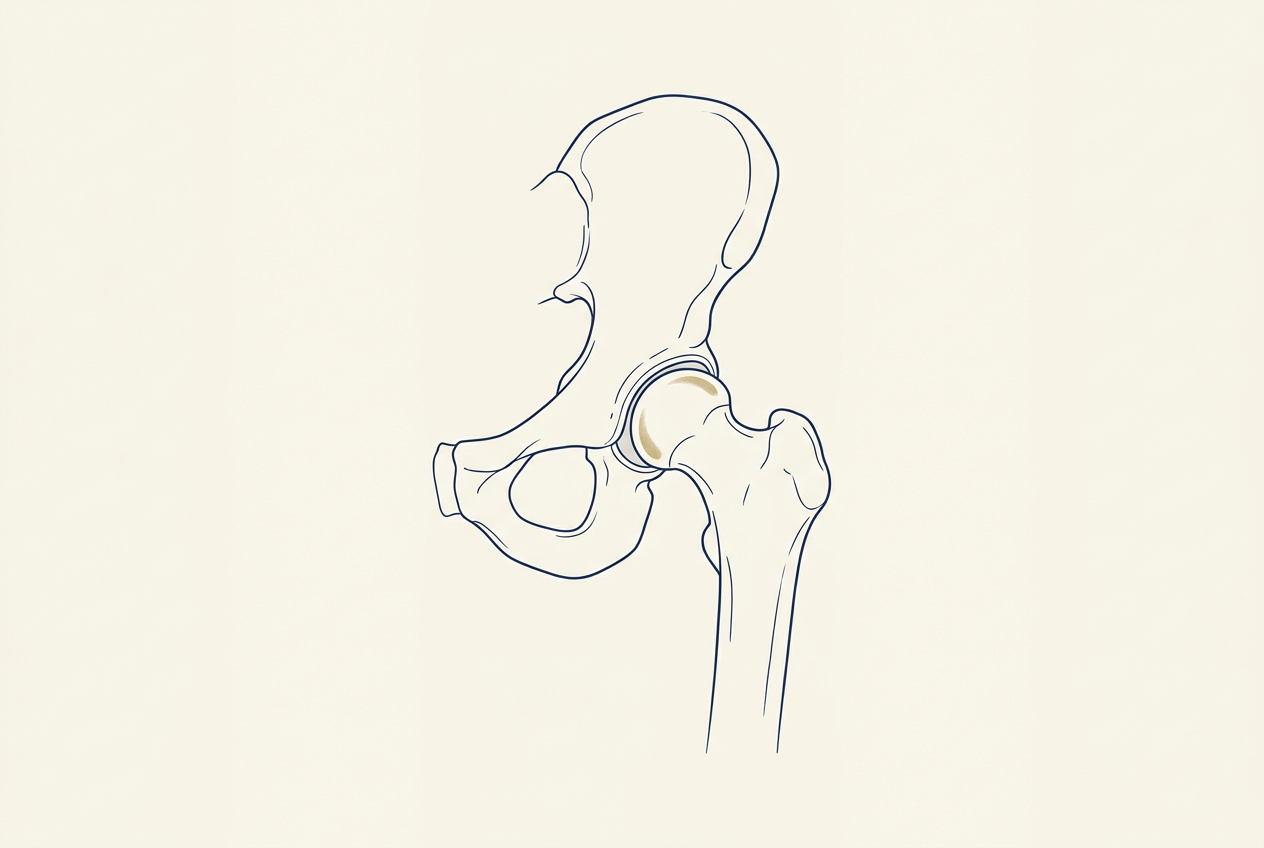
A common assumption is that the hip exam produces one measurement and one rating. In fact the hip is rated plane by plane, and flexion, extension, and abduction each have their own diagnostic code that can pay separately on the same joint. An exam that only measures how far you can lift the knee leaves the rest invisible.
Most veterans assume the hip exam produces one measurement and one rating. It does not. VA rates the hip plane by plane, and flexion, extension, and abduction each have their own diagnostic code that can pay separately on the same joint. An exam that only measures how far you can lift your knee leaves the rest invisible.
How VA rates hip conditions
Hip disabilities are rated under diagnostic codes 5250 through 5255 in the musculoskeletal schedule (38 CFR 4.71a). Most hip ratings come down to range of motion measured in degrees with a goniometer or equivalent device, compared against a normal hip that flexes from 0 to about 125 degrees. Because different codes cover different planes of motion, a single hip can properly carry more than one rating.
The codes and their levels
- DC 5252, limitation of thigh flexion: 10 percent when flexion is limited to 45 degrees, 20 percent at 30 degrees, 30 percent at 20 degrees, and 40 percent at 10 degrees.
- DC 5251, limitation of thigh extension: 10 percent when extension is limited to 5 degrees.
- DC 5253, thigh impairment: 20 percent when abduction is lost beyond 10 degrees, 10 percent when adduction is limited (inability to cross your legs is one example), and 10 percent when rotation is limited so you cannot toe-out more than 15 degrees on the affected leg.
- DC 5250, hip ankylosis: a frozen hip rates 60 percent when favorable, 70 percent intermediate, and 90 percent when unfavorable with the foot not reaching the ground.
- DC 5254, flail joint: 80 percent.
- DC 5255, impairment of the femur: fracture residuals rate 60 to 80 percent for nonunion or a false joint, with malunion rated on the resulting hip or knee disability.
A total hip replacement or resurfacing moves the rating to DC 5054, which pays 100 percent for four months after surgery and rates the residuals afterward.
Separate ratings for separate planes of motion
Flexion, extension, and abduction are measured under different diagnostic codes with independent criteria, so VA can assign separate compensable ratings on the same hip, combined under 38 CFR 4.25. An exam that only measures flexion can leave a compensable abduction limitation completely unrecorded. Make sure the examiner records every plane: flexion, extension, abduction, adduction, and internal and external rotation.
The painful motion floor
Hip measurements often fall short of the compensable thresholds even when the joint hurts constantly. The painful motion rule (38 CFR 4.59) entitles an actually painful joint to at least the minimum compensable rating, and the functional loss rules (38 CFR 4.40 and 4.45) require VA to account for pain, weakness, fatigability, and flare-ups, including after repetitive use. Where pain begins, not where motion stops, is the measurement that counts.
Hips rarely fail alone
Hip arthritis and bursitis commonly develop secondary to service-connected knee, ankle, foot, or back conditions through years of altered gait, and the reverse is just as common. Secondary service connection under 38 CFR 3.310 covers conditions caused or aggravated by a service-connected disability. When both hips are rated, the bilateral factor under 38 CFR 4.26 adds a further 10 percent of the combined value before the final combination.
Common rating details veterans overlook
- Ask for all planes of motion at the exam. Separate ratings under DC 5251, 5252, and 5253 can stack on one hip.
- Painful motion means at least 10 percent under 38 CFR 4.59 even when the degree measurements are noncompensable.
- Flare-ups count. Describe frequency, duration, and what they prevent. An exam on a good day is not the whole record.
- Hip replacement has its own code (DC 5054) with a four-month 100 percent convalescent rating after surgery.