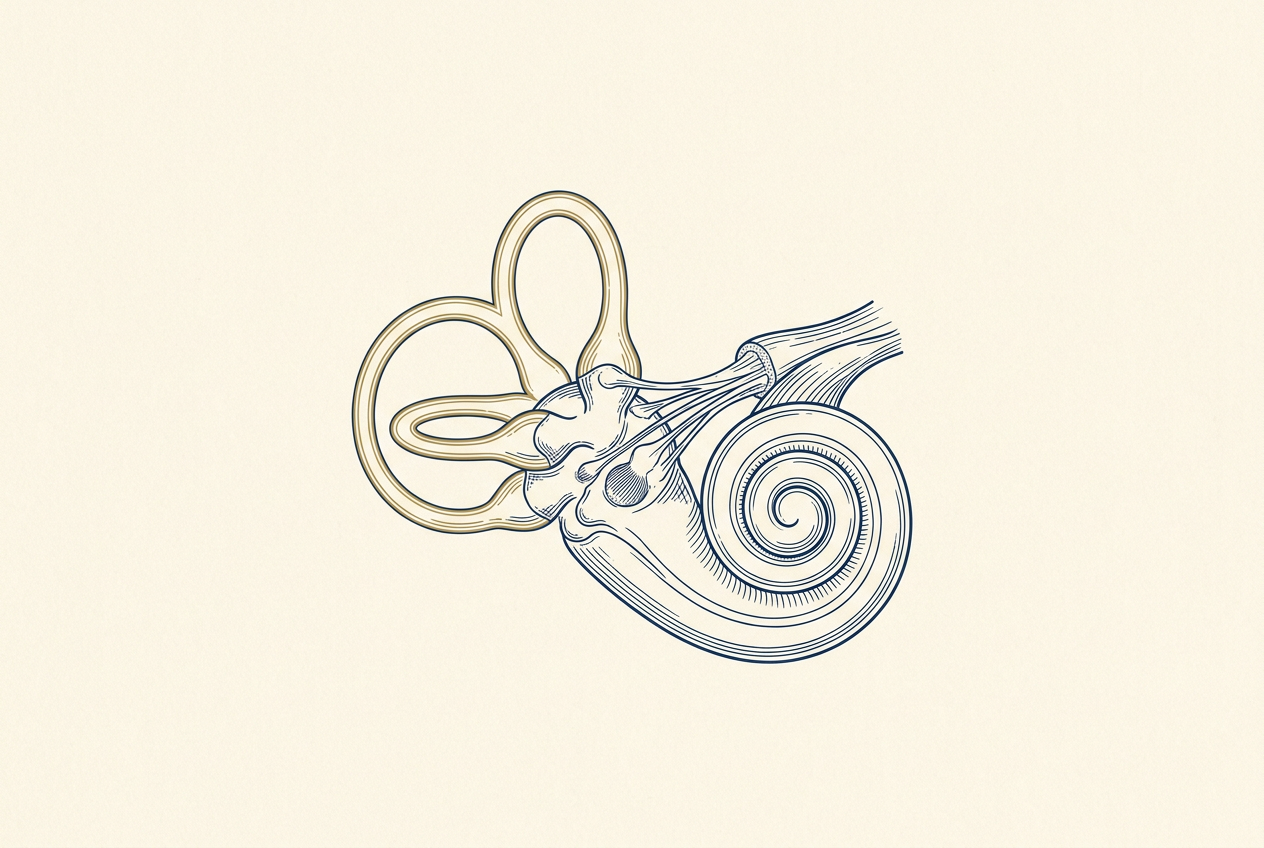
Two words decide most vertigo claims. The first is objective: without a documented vestibular finding, a file full of reported dizziness caps at 0 percent. The second is staggering: dizziness alone is 10 percent, dizziness with occasional staggering is 30, and veterans routinely describe the spinning in detail while never mentioning what it does to their walking.
How VA rates vertigo
Chronic dizziness and balance problems are rated as peripheral vestibular disorders under diagnostic code 6204 in 38 CFR 4.87. The code covers benign paroxysmal positional vertigo (BPPV), labyrinthitis, vestibular neuritis, and other inner ear balance disorders, and it has exactly two levels:
| Rating | Criteria |
|---|---|
| 30 percent | Dizziness and occasional staggering |
| 10 percent | Occasional dizziness |
The note attached to the code carries two rules that decide most claims: objective findings supporting the diagnosis are required before any compensable rating can be assigned, and hearing impairment or suppuration (ear drainage) must be separately rated and combined.
The objective findings gate
A record full of "patient reports dizziness" caps at 0 percent, no matter how bad the spinning is. The code demands objective support for vestibular disequilibrium. That support can come from any clinical or diagnostic finding that documents abnormal vestibular function. Common examples include videonystagmography (VNG) or electronystagmography (ENG), rotary chair testing, caloric testing, computerized dynamic posturography, a positive Dix-Hallpike maneuver for BPPV, or documented nystagmus or a positive Romberg sign on exam. This is not a closed list, and any objective clinical finding corroborating vestibular dysfunction can satisfy the requirement. If dizziness is in the claim, ask for a referral to audiology or ENT for vestibular testing by name. That single test report is the difference between a denial and a rating.
The word "staggering" is worth 20 percentage points
The jump from 10 to 30 percent turns on gait: dizziness alone is 10, dizziness and occasional staggering is 30. Veterans routinely describe the spinning in detail and never mention what it does to their walking. If episodes make you grab walls, veer, stumble, or fall, that belongs in the medical record and in your statement, in exactly those terms, along with any falls documented in emergency or urgent care records.
The Meniere's election secret
If the diagnosis is Meniere's syndrome rather than a garden variety vestibular disorder, an entirely different door opens. Meniere's (DC 6205) runs to 60 and 100 percent, and its note requires VA to rate it either under the 6205 criteria or by separately rating vertigo, hearing impairment, and tinnitus, whichever produces the higher result (never both). DC 6204 stops at 30 percent forever. This makes the diagnosis wording in your file worth real money: recurrent vertigo with fluctuating hearing loss and ear fullness fits the Meniere's picture, and if that is what you have, the record needs to say so. Our Meniere's disease guide covers the 6205 criteria in full.
Ratings that combine with 6204
The 6204 note orders hearing impairment and suppuration rated separately and combined, and tinnitus (DC 6260) is a separate 10 percent as well. A veteran with a vestibular disorder, ringing, and measurable hearing loss carries three ratings that combine under 38 CFR 4.25, not one.
Common rating details veterans overlook
- Vertigo is a common TBI residual. After a head injury, dizziness can be rated as part of the TBI picture or separately under 6204, whichever the evidence supports, without double counting the same symptoms.
- Medication and episode logs work here too. Frequency of episodes, what triggers them, and how long they last is lay-observable evidence that supports both the rating level and the credibility of the objective findings.
- Driving restrictions and work limits belong in the record. Balance disorders that cost a license or a ladder-based trade are direct evidence of occupational impairment for TDIU purposes in severe combined cases.
- A 0 percent grant still opens the door. Service connection with a noncompensable rating converts any future worsening, or a later Meniere's diagnosis, into a straightforward increase claim.