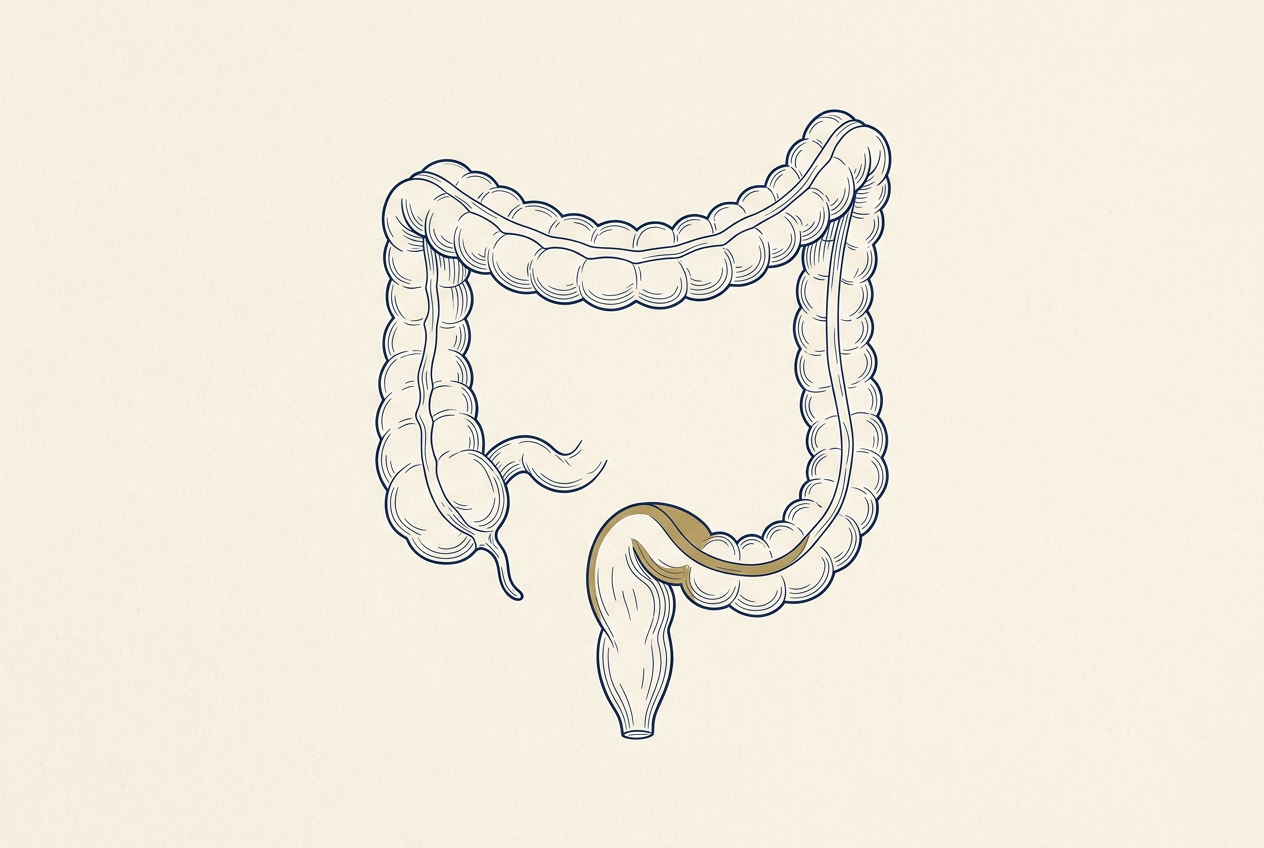
IBS is the rare VA claim where no test has to come back abnormal. The rating is a counting exercise, how many days of defecation-related pain across a rolling three month window, which makes a dated symptom diary worth more than another round of imaging. And for veterans with Southwest Asia service, the claim needs no nexus opinion at all.
How VA rates IBS
IBS is one of the rare VA claims where no test has to come back abnormal. The rating is a counting exercise: how many days of defecation-related pain across a rolling three-month window. That makes a dated symptom diary worth more than another round of imaging. And for veterans with Southwest Asia service, the claim needs no nexus opinion at all.
How VA rates IBS
Irritable bowel syndrome is rated under diagnostic code 7319 in 38 CFR 4.114. The criteria were completely rebuilt in the May 19, 2024 digestive system revision. The old "mild, moderate, severe" judgment language is gone, replaced by objective counting of episodes. The same code now also covers other functional digestive disorders such as functional dyspepsia, functional bloating, functional constipation, and functional diarrhea.
| Rating | Criteria |
|---|---|
| 30 percent | Abdominal pain related to defecation at least one day per week during the previous three months, and two or more of the six signs below |
| 20 percent | Abdominal pain related to defecation at least three days per month during the previous three months, and two or more of the six signs below |
| 10 percent | Abdominal pain related to defecation at least once during the previous three months, and two or more of the six signs below |
The six signs, of which any two qualify: (1) change in stool frequency, (2) change in stool form, (3) altered stool passage, which can include straining, urgency, incomplete evacuation, or similar manifestations, (4) mucorrhea, (5) abdominal bloating, and (6) subjective distension.
The rating is a counting exercise, so count
Every level turns on how often abdominal pain tied to defecation occurs across a three-month window: once in three months is 10 percent, three days a month is 20 percent, one day a week is 30 percent. Nobody remembers this accurately a year later, and a C&P examiner will not reconstruct it for you. A dated symptom diary noting pain days, stool changes, bloating, and urgency converts "my stomach is a mess" into the exact criteria language. Note what does not matter: no test has to be abnormal, because IBS is diagnosed clinically, and the two-of-six signs are symptoms you report.
The Gulf War presumptive: IBS needs no nexus at all
For veterans who served in the Southwest Asia theater any time since August 2, 1990, IBS is a presumptive condition. Functional gastrointestinal disorders are one of the three named medically unexplained chronic multisymptom illnesses under 38 CFR 3.317, and the note to DC 7319 itself points there. That means no nexus letter and no in-service diagnosis. Qualifying service plus a current IBS diagnosis manifesting to at least 10 percent within the rule's window carries the claim. Most denied IBS claims from Gulf War era veterans were simply never developed under 3.317. Our complete Gulf War presumptives guide covers the deadline and the details.
Secondary paths for everyone else
Veterans without qualifying Gulf War service usually connect IBS one of two ways: directly, with service treatment records showing chronic GI complaints, or secondary to another service-connected condition under 38 CFR 3.310. The gut-brain relationship between IBS and mental health conditions such as PTSD and anxiety is well documented in the medical literature, and long-term NSAID or antibiotic use for service-connected conditions is another recognized path. Both require a medical opinion connecting the dots.
Common rating details veterans overlook
- 30 percent is the ceiling under DC 7319. If the disability picture is worse, the diagnosis question matters. Inflammatory bowel disease (Crohn's, ulcerative colitis) rates under DC 7326 with levels up to 100 percent. Make sure the label is right.
- Claims pending before May 19, 2024 are evaluated under both the old and new criteria, whichever is more favorable.
- IBS commonly pairs with GERD. They are separate diagnostic codes rated separately, subject to the pyramiding rule in 38 CFR 4.14: distinct symptoms, distinct ratings.
- The three-month window is rolling. A flare-heavy quarter documented in a diary supports an increase claim even if earlier months were quiet.