Lumbar Spine (Low Back) VA Disability Rating
- Service connection requires a current diagnosis, an in-service event or exposure, and a medical link (nexus) between the two.
- VA assigns ratings of 10% to 100% under diagnostic code 5237, using the criteria in the rating table below.
- The percentage assigned turns on Range of motion and ankylosis.
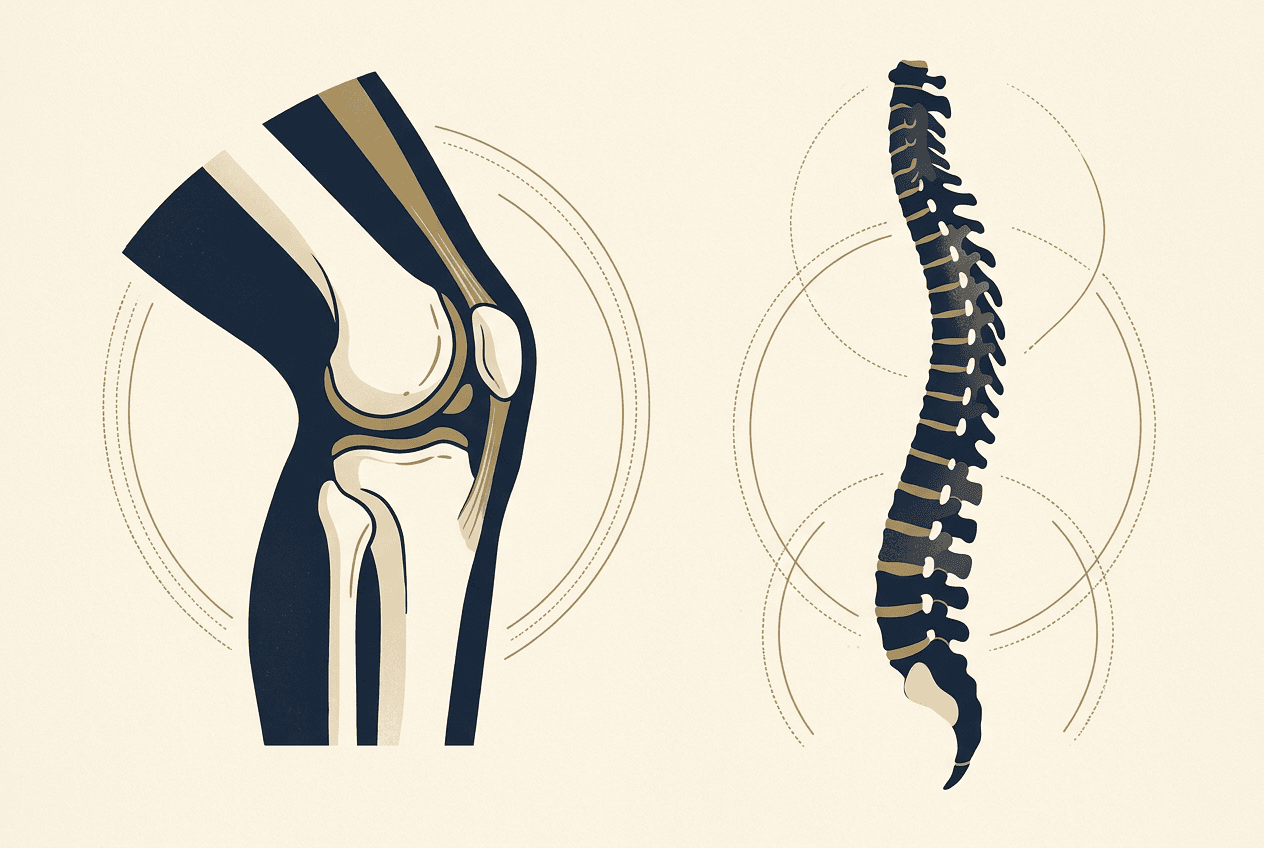
Thoracolumbar spine forward flexion, by rating
- 0%More than 85 degrees0 percent. Normal range or near-normal.
- 10%More than 60, up to 85 degrees10 percent. Mild limitation.
- 20%More than 30, up to 60 degrees20 percent. Moderate limitation.
- 40%30 degrees or less, OR favorable ankylosis40 percent. Severe limitation or favorable ankylosis.
- 50%Unfavorable ankylosis, entire thoracolumbar50 percent. Unfavorable ankylosis of the thoracolumbar.
- 100%Unfavorable ankylosis, entire spine100 percent. Unfavorable ankylosis of the entire spine.
| Rating | Criteria |
|---|---|
| 10% | Forward flexion greater than 60 degrees but not greater than 85 degrees, or combined range of motion greater than 120 degrees but not greater than 235 degrees. |
| 20% | Forward flexion greater than 30 degrees but not greater than 60 degrees, or combined range of motion not greater than 120 degrees. |
| 40% | Forward flexion 30 degrees or less, or favorable ankylosis of the entire thoracolumbar spine. |
| 50% | Unfavorable ankylosis of the entire thoracolumbar spine. |
| 100% | Unfavorable ankylosis of entire spine. |
Illustrative scenarios showing how the criteria above are applied. These are educational examples, not a prediction of any individual veteran's rating.
Forward flexion measured around 50 degrees
Illustrates 20%Situation. A veteran's C&P exam measured forward bending of the low back at about 50 degrees, with pain through the motion.
How the criteria apply. The spine is rated on measured range of motion. Forward flexion greater than 30 but not greater than 60 degrees rates 20 percent. Under DeLuca, the examiner also accounts for pain, weakness, and flare-ups, so painful or repeated motion can support the higher figure.
Bending stops at about 25 degrees
Illustrates 40%Situation. A veteran can only bend forward to about 25 degrees before pain stops the motion.
How the criteria apply. Forward flexion of 30 degrees or less rates 40 percent. The goniometer measurement at the exam, including the point where pain limits motion, drives the number, which is why an accurate and honest exam matters so much here.
The single most important measurement is how far you can bend forward at the waist. Pain on motion and additional functional loss can support a higher rating.
What VA looks at
Forward flexion in degrees, combined ROM, ankylosis, painful motion, flare-up impact, neurological symptoms.
Common exam and DBQ topics
Range of motion, painful motion, flare-ups, neurological deficits, sensation in lower extremities.
Evidence that usually matters
Imaging, range of motion measurements, physical therapy records, in service documentation.
Common misunderstandings
Separate ratings for radiculopathy of the lower extremities are often available in addition to the back rating.
Drawn directly from the VA Disability Benefits Questionnaire (DBQ). The examiner records each item below; the rating then maps to the table above.
- Record diagnoses (degenerative disc disease, IVDS, strain, herniation) with date of diagnosis.
- Measure forward flexion, extension, lateral flexion (left/right), and rotation (left/right) of the thoracolumbar spine in degrees.
- Note pain on motion, additional limitation after repetitive use, and any abnormal gait or spinal contour.
- Document neurological findings, strength testing, deep tendon reflexes, sensory exam, and straight-leg raise.
- Quantify any incapacitating episodes due to Intervertebral Disc Syndrome (IVDS) over the past 12 months.
- Functional impact on lifting, bending, sitting, standing, and employment.
Back and neck evidence checklist
Spine ratings turn on measured range of motion, painful motion, flare ups, and functional loss. The exam captures one day; your evidence has to show the rest of them.
- Current diagnosis (strain, degenerative disc disease, stenosis, etc.)
- Imaging if available: X-ray, MRI, or CT reports
- The in service event, injury, or duty pattern that started it
- Treatment history: visits, physical therapy, injections, surgery
- Range of motion findings from any prior exam or PT notes
Small rules in the regulations decide a surprising number of claims. These are the ones that most often change a lumbar spine (low back) outcome. None of this is legal advice; it is a map of where to look.
The back pays mostly on measured forward bending, so the exam must measure your motion with a goniometer, including after repeated use. Eyeballing it can shortchange you.
WhyThe spine is rated mostly on measured range of motion or ankylosis, and forward flexion thresholds set the percentage. The exam has to measure your motion with a goniometer, including after repeated use, for the rating to be accurate.
38 CFR 4.71aWas this helpful?If you have disc disease, VA can rate it on doctor-ordered bed-rest episodes instead of motion, and must use whichever pays more.
WhyIf you have intervertebral disc syndrome, VA can rate it on doctor-prescribed periods of bed rest (incapacitating episodes) instead of on range of motion, and must use whichever method gives the higher rating.
38 CFR 4.71aWas this helpful?Pain, numbness, or weakness shooting into a leg is rated on its own on top of the back rating. Combining the two is allowed, not double dipping.
WhyRadiculopathy, the pain, numbness, or weakness that radiates into a leg, is rated on its own under the nerve codes on top of the back rating. Combining the two is not pyramiding because they compensate different problems.
38 CFR 4.124aWas this helpful?
- Pain and repeated motion have to be tested, not just one slow stretch
For a joint, the examiner is supposed to test range of motion after repeated use and record where pain begins, plus weakness, fatigue, and loss of coordination. Under 38 CFR 4.40, 4.45, and 4.59, that functional loss can push a rating above what a single measurement shows. The DeLuca and Mitchell decisions are where this comes from.
38 CFR 4.59 - A joint should be measured both ways, and against the other side
A joint exam is expected to record motion both active and passive, in weight bearing and non weight bearing, and to compare the injured joint with the opposite one. The Correia decision reads 38 CFR 4.59 to require this. If the report lists only one number, the exam may be incomplete.
38 CFR 4.59 - Flare ups count even if your joint behaved on exam day
If you have flare ups, the examiner is supposed to ask how bad they get and estimate the extra loss of motion during a flare, or explain why an estimate is not possible. The Sharp decision says the examiner cannot just write that it cannot be said without speculation. Describe your worst days clearly.
38 CFR 4.40
- What you and people around you witnessed is real evidence
You do not always need a doctor to prove a symptom you can see, hear, or feel. Statements from you, family, or fellow service members about things like pain, ringing in the ears, or panic attacks are competent lay evidence under 38 CFR 3.159. A clear buddy statement with dates and specifics can carry weight.
38 CFR 3.159 - A tie goes to you
When the evidence for and against a point is roughly equal, VA is required to decide in the veteran's favor. This benefit of the doubt rule lives in 38 CFR 3.102. You do not have to prove a claim beyond all doubt, only to bring the evidence to about even.
38 CFR 3.102 - An unbroken line of symptoms can stand in for a paper trail
For certain chronic conditions, showing symptoms that continued from service to now can help establish service connection even without a perfect record. This continuity of symptomatology idea comes from 38 CFR 3.303(b) and applies to the chronic diseases the regulation lists.
38 CFR 3.303 - If it happened in combat, your word can be enough that the event occurred
For anyone who served in combat, VA must accept your own account of what happened during that combat as proof the event took place, as long as it fits the conditions of your service, even when no record survives. This comes from 38 U.S.C. 1154(b). It does not by itself prove the injury, but it can establish the in service event.
38 U.S.C. 1154(b) - If it was not written down at entry, you are presumed to have entered healthy
Unless a condition was noted on your entrance exam, the law presumes you were sound when you entered service. To rebut that, VA has to show by clear and unmistakable evidence both that the condition existed before service and that service did not make it worse. See 38 CFR 3.304(b).
38 CFR 3.304 - You can reopen a denied claim with new and relevant evidence and keep your date
After a decision, a Supplemental Claim lets you add new and relevant evidence. If you file it within one year of the decision, you protect your original effective date, so back pay can reach further. See 38 CFR 3.2501.
38 CFR 3.2501 - Pain that limits you can be a disability on its own
You do not always need a separate named diagnosis. After the Saunders decision, pain that causes functional loss can itself be a disability for compensation. Describe exactly what the pain stops you from doing. This pairs with the functional loss rules in 38 CFR 4.40.
38 CFR 4.40 - Some conditions are presumed if they show up within a year of getting out
Certain chronic diseases, including hypertension, arthritis, and diabetes, that appear to a compensable degree within one year of leaving service are presumed connected to service, even without proof of a specific cause. See 38 CFR 3.307 and the list in 3.309.
38 CFR 3.309 - A diagnosis years later can still be service connected
A condition first diagnosed long after you left service can still be service connected if the evidence ties it back to something in service. You do not need a diagnosis while still in uniform. See 38 CFR 3.303(d).
38 CFR 3.303
- The same symptom is rated once, but separate problems are rated separately
VA cannot rate the same symptom twice, which is pyramiding under 38 CFR 4.14, but it can and should rate distinct problems on their own. A scar and the loss of motion under it, for example, can each be rated. The Esteban decision is the classic example.
38 CFR 4.14 - One service connected condition can open the door to another
A condition caused by, or made worse by, a service connected condition can be service connected too. Sleep apnea linked to weight gain from a service connected condition, or depression linked to chronic pain, are common examples. This secondary path is in 38 CFR 3.310.
38 CFR 3.310 - Your rating can change by time period
If a condition was worse during one stretch and better during another, VA can assign different ratings for those periods rather than one flat number. These are called staged ratings, and they flow from VA's duty to consider the whole recorded history under 38 CFR 4.1 and 4.2.
38 CFR 4.2 - Ratings are combined with a table, not added
Two disabilities at 50 and 50 do not make 100. VA combines them with the table in 38 CFR 4.25, working from the largest down, then rounds to the nearest 10 only at the very end. This is why a 30 and a 20 can land on 40, not 50.
38 CFR 4.25 - Matching injuries on both sides earn a hidden bonus
When you have disabilities affecting both arms, both legs, or paired muscle groups, VA adds an extra 10 percent of their combined value before folding in the rest, the bilateral factor. It is easy to overlook and can change your final number. Since April 16, 2023, the factor can only help: when leaving it off would produce a higher combined rating, VA must use the higher result. See 38 CFR 4.26.
38 CFR 4.26 - If the schedule does not fit your case, VA can rate outside it
When your disability picture is so unusual that the normal rating schedule does not capture it, for example frequent hospital stays or marked interference with work, VA can refer the case for an extraschedular rating. It is uncommon but real, under 38 CFR 3.321(b)(1).
38 CFR 3.321 - A painful joint earns at least the minimum rating
If a joint hurts when you move it, that painful motion is supposed to earn at least the minimum compensable rating, usually 10 percent, even when the joint still moves through a normal range. This comes from 38 CFR 4.59 and the Burton decision. Make sure pain on motion is written down.
38 CFR 4.59 - When you are between two ratings, the higher one should win
If your symptoms sit between two rating levels, VA is supposed to assign the higher one when your overall disability picture more nearly matches it. This is the reasonable doubt rule applied to ratings, in 38 CFR 4.7.
38 CFR 4.7 - You do not have to check every box on the list
The symptoms listed at each rating level are examples and guides, not a strict checklist. VA is not supposed to deny a level just because you do not have every single symptom named. See 38 CFR 4.21.
38 CFR 4.21
- You can lock in your start date before the full claim is ready
Filing an intent to file holds your effective date for up to a year while you gather evidence. If you complete the claim within that year, back pay can run from the intent to file date, not the later submission. See 38 CFR 3.155.
38 CFR 3.155 - Older ratings get harder to take away
A rating in place for 5 years is treated as stabilized, one in place for 10 years has protected service connection, and one in place for 20 years generally cannot be reduced below its level except for fraud. See 38 CFR 3.344, 3.957, and 3.951.
38 CFR 3.344 - VA cannot cut a rating without showing real, lasting improvement
To reduce a rating, VA generally has to show actual improvement under the ordinary conditions of life and work, not just one better exam. The rules are in 38 CFR 3.344, and a proposed reduction comes with notice and a chance to respond first.
38 CFR 3.344 - You can be paid at the 100 percent rate without a 100 percent rating
If service connected conditions keep you from holding steady, gainful work, VA can pay you at the 100 percent rate through TDIU, even if your combined rating is lower. Under the Rice decision, VA must consider TDIU whenever the record raises it, even if you never asked for it by name. See 38 CFR 4.16.
38 CFR 4.16 - Your back pay date is worth checking yourself
Your award usually runs from the date you filed or the date entitlement arose, whichever is later, with special rules for claims filed within a year of leaving service. Knowing your effective date under 38 CFR 3.400 is how you catch retroactive pay that came up short.
38 CFR 3.400 - A clear error in an old decision can be fixed back to day one
A final decision that contained a clear and unmistakable error can be revised at any time, and the correction runs back to the original date, not the date you pointed out the error. The bar is high: the error has to be undebatable. See 38 CFR 3.105(a).
38 CFR 3.105 - Needing help at home can add money on top of your rating
If you need help with everyday activities, or are largely confined to your home because of disability, you may qualify for Aid and Attendance or Housebound payments added to your monthly amount. See 38 CFR 3.350 and 3.352.
38 CFR 3.352 - Surgery can earn a temporary 100 percent rating while you heal
After certain surgeries, or when a service connected joint is immobilized in a cast, VA can grant a temporary 100 percent rating during recovery and then return you to your prior rating. It is easy to miss because you have to flag it. See 38 CFR 4.30.
38 CFR 4.30 - A long hospital stay can pay at 100 percent for that time
If you are hospitalized more than 21 days for a service connected condition, VA can pay you at the 100 percent rate for that period, then drop back to your regular rating afterward. See 38 CFR 4.29.
38 CFR 4.29 - Even a 0 percent rating is worth winning
A 0 percent rating still confirms the condition is service connected. That opens the door to secondary claims, to an increase later if it worsens, and can affect VA health care priority. Do not walk away from a noncompensable grant. See 38 CFR 4.31.
38 CFR 4.31 - A new law can pay you back to its start date
When a new law or presumption adds a condition, your benefits can reach back to the law's effective date, up to one year before you filed. This matters for PACT Act and other presumptive expansions. See 38 CFR 3.114.
38 CFR 3.114 - If VA later finds lost service records, your date can reach back
When VA later locates relevant official service records it did not have the first time, it must reconsider the claim, and the effective date can run back to your original filing, even years later. See 38 CFR 3.156(c).
38 CFR 3.156 - An increase can be backdated up to a year
For a condition that got worse, your higher rating can be paid up to one year before you filed, if the record shows the worsening was clearly there during that window. See 38 CFR 3.400(o)(2).
38 CFR 3.400 - One total rating plus 60 percent more can mean extra money
If you have a single disability rated 100 percent and other service connected disabilities adding to 60 percent or more, you may qualify for housebound special monthly compensation, paid on top of the 100 percent rate. See 38 CFR 3.350(i).
38 CFR 3.350
Find medical studies for Lumbar Spine
These search starters open PubMed and PubMed Central (the National Library of Medicine's free databases) pre-filled for this condition. Strong, peer reviewed studies can help a qualified provider write a more persuasive nexus opinion.
Studies on how this condition develops and what raises the risk.
Research on how this condition is associated with or follows another.
Systematic reviews and meta analyses that summarize many studies.
Read complete studies for free in PubMed Central.
How does VA rate a back condition?
Mostly by how far you can bend. The examiner measures your range of motion with a goniometer, and the more limited and painful that motion is, the higher the rating. Muscle spasms, guarding, and an abnormal posture or gait can push the rating up too.
What if my back is worse on some days than others?
That matters, and it is worth describing. VA is supposed to account for pain, weakness, and flare-ups, not just your best moment in the exam room. Telling the examiner how a bad day limits you, and how often those days happen, helps the rating reflect real life.
Can a back problem lead to other ratings?
Often, yes. Nerve pain that radiates down a leg, called radiculopathy, is rated separately from the spine itself, so a single back condition can support more than one rating when the nerve involvement is documented.
You have three review lanes, pick the one that fits the situation.
Under the Appeals Modernization Act (38 CFR 3.2500), a Higher Level Review or a Board Appeal must be requested within one year of the decision notice. A Supplemental Claim can generally be filed at any time after the decision, but filing any of the three within that one year window is what keeps the claim continuously pursued and protects the original effective date; wait longer and a later award may start from the new filing date instead.
Secondary conditions veterans research
With back and neck conditions, some veterans research whether these followed. None of this is automatic; a secondary claim needs its own diagnosis and medical nexus evidence.
- Radiculopathy (nerve pain down a limb)
nerve symptoms radiating from the spine are rated separately from the back itself
- Hip or knee pain from an altered gait
favoring one side for years can load other joints
- Sleep disturbance from chronic pain
pain that interrupts sleep is its own documented problem
- Depression or anxiety from chronic pain
mental health secondary to pain is among the most researched relationships
Related conditions
Background reading
Supplemental articles that connect to this condition.
Your VA claims file (the C-File) and your C&P exam reports are the documents VA used to decide your case. You have the right to a copy. Here are the three working request paths in 2026, plus a full guide to what is inside the file, how to read the rating code sheet, and how to use it for an appeal, a supplemental claim, a proposed reduction, or an effective date fight.
If a service connected condition has grown more severe, you can ask VA to evaluate it at a higher level. A special effective date rule under 38 CFR 3.400(o)(2) can reach back up to a year when the worsening is factually ascertainable. Here is how the increase claim works.
If a service connected condition has worsened, you can ask VA for a higher rating. Here are the three honest routes (file for an increase, add a secondary condition, or pursue TDIU), the evidence that actually moves a rating, and the one reduction risk to understand before you file.
When VA later receives official service records that existed but were missing from your file, 38 CFR 3.156(c) lets it reconsider the original claim, and the effective date can reach back to that original date. Here is what counts, the key exclusion, and how to invoke it.
Most spine conditions use one formula based on range of motion, ankylosis, or disc-disease episodes. Here are the thoracolumbar and cervical numbers, the incapacitating-episodes path, why nerve damage is rated separately, and the nuances that decide your back rating.
Total Disability based on Individual Unemployability lets a veteran be paid at the 100 percent rate even when the schedular combined rating is lower.
Since Feb 19, 2019, a veteran who disagrees with a VA decision picks from three review lanes: Higher Level Review, Supplemental Claim, or Board Appeal. This is a Walkthrough what each lane is, what it requires, what it costs in time, and how to keep your effective date protected.
A Supplemental Claim is filed on VA Form 20-0995 and reopens a prior decision based on new and relevant evidence. This article walks the standard, the duty to assist, the one year window, and what counts as 'new' vs 'relevant' under 38 CFR 3.2501.
What a secondary service connection is, the most common pairings VA actually sees, and what evidence you need to file one.
VA decision letters use a small vocabulary of words that decide everything for years to come: granted, denied, deferred, evaluation continued, remanded. Here is what each one actually means.
A Higher Level Review is filed on VA Form 20-0996 and asks a senior VA adjudicator to look at the file again. No new evidence is allowed. This article walks the form, the informal conference, the duty to assist error path, the one year window, and where HLR is the right fit.
Under 38 CFR 4.26, when two paired body parts (both knees, both shoulders, both feet) are rated, an extra 10 percent is added to the combined value of the pair BEFORE the VA-math combination with non-bilateral ratings. Most veterans either over-estimate the factor or miss it entirely. The exact math, when it applies, and how to surface a missed factor through Higher Level Review or a CUE motion.
TDIU under 38 CFR 4.16 and a schedular 100 percent rating both pay the same monthly compensation, but they are not the same rating. Five things separate them: reducibility, SMC-S housebound eligibility, CHAMPVA for the family, Dependents Educational Assistance under Chapter 35, and the 8-year DIC additional allowance clock. This article walks through each difference and how to ask VA for a permanence designation when it matters.
Two federal concurrent-receipt programs restore military retired pay that used to be offset by VA disability compensation. CRDP is broader, taxable, and automatic at 50 percent VA. CRSC is narrower to combat related conditions, tax free, and requires an application to the service branch. A retiree eligible for both picks one each year. Math, eligibility, and how the open-season election works.
A successful CUE motion revises a final VA decision back to the original decision date, sometimes producing retroactive payments going back decades. The standard is high. The motion must prove all three prongs from Russell v. Principi: the correct facts or law were missing, the error was undebatable, and the error would have manifestly changed the outcome. What CUE is, what it is not, and how to write a motion that survives initial review.
A nexus opinion is stronger when it cites peer reviewed medical literature. This guide shows you where to search (PubMed, PubMed Central, MedlinePlus, and the VA/DoD Clinical Practice Guidelines), how to search well, how to read a study, and how to hand the findings to a provider who writes your nexus letter.
C&P examiners describe how veterans walk using exact clinical terms: antalgic, steppage, hemiparetic, Trendelenburg, festinating, sensory ataxic, waddling. Each of those words triggers different parts of the rating schedule. Here is what they mean, why they matter, and how to get the functional-loss credit you have the right to under DeLuca v. Brown.
A proposed-reduction letter is one of the worst pieces of mail VA sends. You have 60 days to send evidence and 30 days to demand a predetermination hearing. Beyond that, 38 CFR 3.344 protects long-standing ratings. Here is the procedural roadmap, the stabilization rules that can stop a reduction cold, and a step-by-step response plan.
An Intent to File is the simplest way to protect your back pay. It holds your effective date for up to one year while you gather evidence, so VA can pay from the earlier date once the claim is granted. Here is what it does, how to start one, and the one year clock to watch.
The rule against pyramiding in 38 CFR 4.14 stops VA from compensating the same loss of function twice. But under Esteban v. Brown, distinct symptoms from one injury can be rated separately. Here is the line between the two, with real examples.
Two tools for when one flat percentage does not fit: staged ratings, for when severity changed over time (Fenderson, Hart), and extra-schedular ratings under 38 CFR 3.321(b), for when the schedule does not capture your disability picture (the Thun three step test).
A denied or low VA decision is rarely final. You have one year to choose one of three review lanes (Supplemental Claim, Higher-Level Review, or Board Appeal) and keep the effective date that protects your back pay. Here is how to read the letter, choose the right lane, and build the record around the reason for denial.
SMC pays extra for serious losses or for needing daily help, above or in place of the regular rate. Here are the letter levels K through S plus R and T, how Aid and Attendance and Housebound work, how you get SMC, and a worked SMC-S example.
If VA provides a C&P exam, it must be adequate for rating. Here is what makes an exam adequate, the signs it was not (no rationale, ignored flare-ups, wrong DBQ), and how to respond with a Higher-Level Review or a supplemental claim and a rebuttal opinion.
Your rating may also qualify you for state-level benefits.
VA compensation is federal, but every state layers its own benefits on top. Many states reduce or waive property tax for disabled veterans, and many offer license, tuition, or vehicle benefits at various rating levels. The thresholds, dollar amounts, and eligibility rules vary widely from state to state, so the reliable answer is always your own state's guide.
Put this rating to work
Free calculators and a guide to turn a rating percentage into real numbers. Your figures stay on your device unless you ask us to email an estimate.
Add this condition to your other ratings using VA math, not simple addition.
See the 2026 monthly payment for a rating, including dependents.
Estimate retroactive pay from your effective date.
How one service connected condition can support a claim for another.
Most recent human review on this page, July 5, 2026. Below is the review history across this page, its citations, and the supplemental articles it links to.
- July 5, 2026articleHow VA Rates the Spine (38 CFR 4.71a): Motion, Ankylosis, and Separate Nerve Ratings
- July 5, 2026articleWhen a C&P Exam Is Inadequate: How to Spot It and What to Do
- July 5, 2026articleNew Service Records and 38 CFR 3.156(c): Reopening with Your Effective Date Protected
- July 5, 2026articleSpecial Monthly Compensation (SMC): Higher Pay Beyond 100 Percent
- July 5, 2026articleVA Claim Denied: What to Do Next
- July 5, 2026articleHow to Increase Your VA Disability Rating