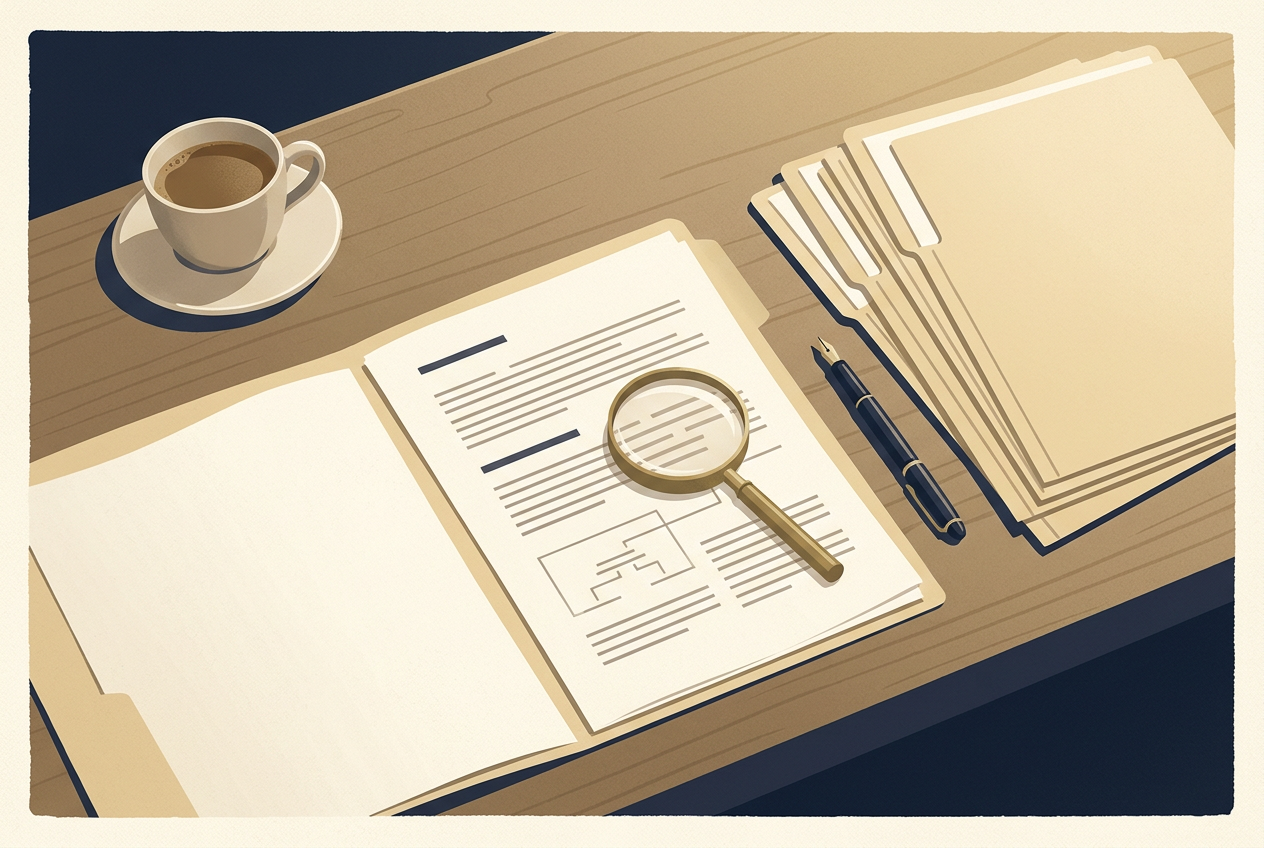
Most veterans argue their claim from the records in their own hands, assuming the file VA reads is the same one. It is not: the claims file holds every exam VA ordered, every adjudicator note, and every prior decision, and a single examiner sentence in it can drive a denial. Requesting the C-file before refiling replaces guesswork with a map.
The silent evidence already sitting in your VA file
Most veterans argue a claim from the records in their own hands, assuming the file VA reads is the same one. It is not. The claims file holds every exam VA ordered, every adjudicator note, and every prior decision. A single examiner sentence in it can drive a denial. Requesting the C-file before you refile replaces guesswork with a map.
What lives in your claims file
The claims file, or C-file, gathers your service treatment records, your personnel file, every exam VA has ordered, prior rating decisions, and the notes adjudicators wrote along the way. It can run to hundreds of pages. Buried in it are findings that help you and findings that hurt. You cannot answer either one until you have read them.
Why silent evidence cuts both ways
A compensation exam you forgot about, a single line in a personnel record, an old diagnosis you never mentioned: any of these can quietly drive a decision. Silent evidence helps when it shows an event during service or an early symptom. It hurts when an examiner's offhand sentence becomes the reason for denial. Either way, the file is making the argument, and you should know what it says.
How to request your C-file
Request your complete claims file from VA before you refile. Reading it tells you which elements VA already accepted, which examiner sentence drove the denial, and where the record is thin. That reading turns guesswork into a focused next step rather than another stack of paper.
When old records reopen a claim
If service department records existed but were not associated with your file when VA first decided, finding them later can do more than support a new claim. Under 38 CFR 3.156(c), relevant service records that VA did not consider can reopen the original decision and, in some cases, move the effective date back to the first claim. Silent evidence found late can reach years into the past.
Key points veterans often overlook
- The file VA reads is larger than the file you hold, so request your complete C-file.
- Silent evidence decides claims quietly, for and against you, until you read it.
- One examiner sentence in the record can be the entire reason for a denial.
- Reading the file first shows which elements were accepted and where the record is thin.
- Service records found late can reopen a decision under 38 CFR 3.156(c), sometimes with an earlier effective date.
Related on this site
- Request your C-file and C&P exam report
- How to read your VA rating decision
- Why filing more records does not always fix a denial
- Building your evidence: what VA looks for
Common questions
What is in my VA claims file (C-file)?
Your service treatment records, personnel file, every exam VA has ordered, prior rating decisions, and the notes adjudicators wrote along the way, often hundreds of pages. It is the record VA actually decides from, and it is almost always larger than the file you hold.
Why should I read my C-file before refiling?
Because it tells you which elements VA already accepted, which examiner sentence drove the denial, and where the record is thin. A compensation exam you forgot about or a single line in a personnel record can quietly drive a decision either way, and you cannot answer it until you have read it. Reading first turns guesswork into a focused next step.
Can old service records reopen a decided claim?
Yes. Under 38 CFR 3.156(c), relevant service department records that existed but were not associated with the file when VA first decided can reopen the original decision, and in some cases move the effective date back to the first claim, reaching years into the past.
How do I get my C-file?
Request your complete claims file from VA; it is worth doing before any refiling. Records you believed were lost are sometimes already scanned into VA's system, and the guide on requesting your C-file and C&P exam report on this site walks through the exact steps.