A neck rating that stops at the neck is usually leaving money behind. The spine formula orders VA to rate radiating arm symptoms separately on top of the orthopedic number, and muscle spasm or guarding alone can carry 10 or 20 percent even when the motion measurements look decent. The claim should describe the arms, not just the neck.
A neck rating that stops at the neck usually leaves money behind. The spine formula requires VA to rate radiating arm symptoms separately on top of the orthopedic number, and muscle spasm or guarding alone can carry 10 or 20 percent even when the motion measurements look decent. Your claim should describe your arms, not just your neck.
How VA rates neck pain
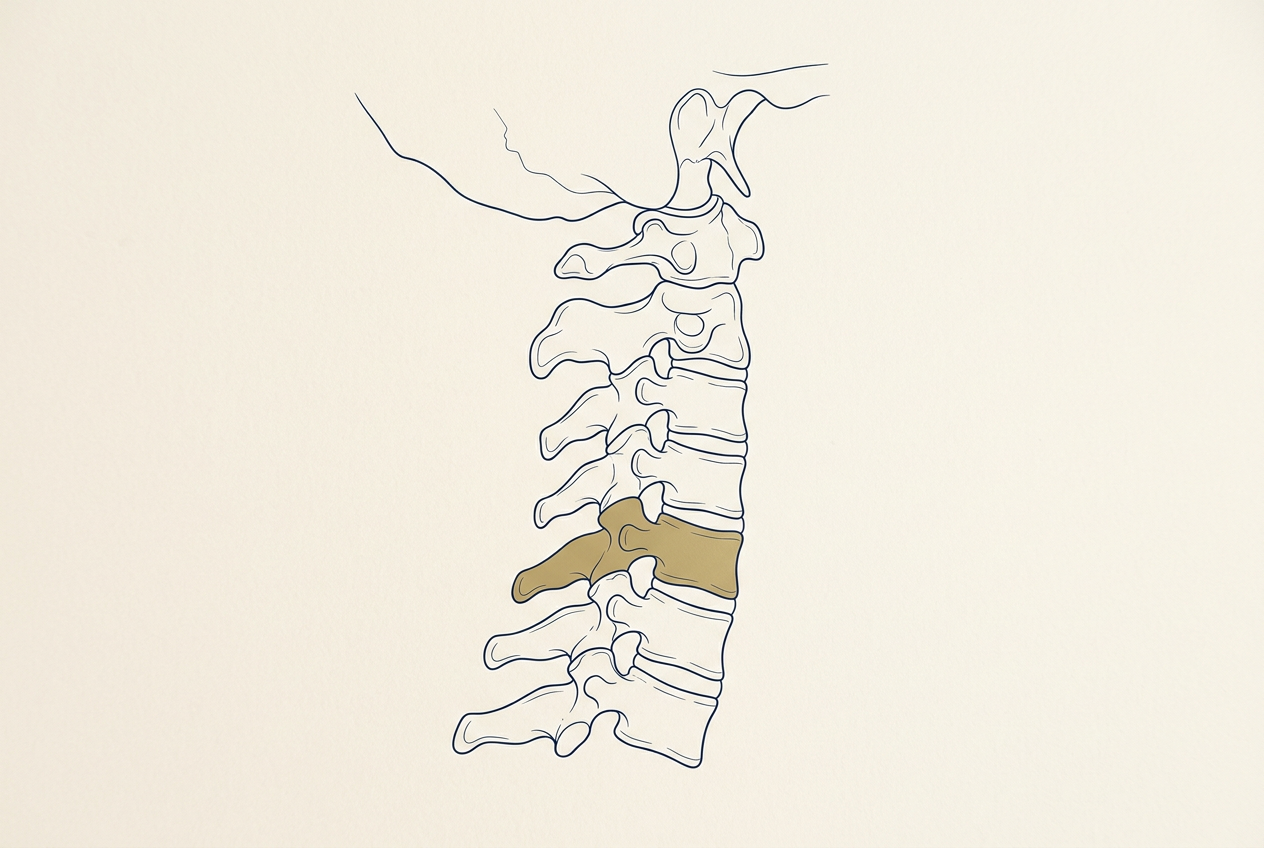
Cervical strain is rated under diagnostic code 5237 (38 CFR 4.71a) using the general rating formula for diseases and injuries of the spine, which also covers degenerative arthritis of the cervical spine (DC 5242) and intervertebral disc syndrome (DC 5243). The formula applies with or without symptoms such as pain, stiffness, or aching, whether or not the pain radiates. What it measures is motion: chiefly how far you can bend your neck forward (forward flexion), from a normal of 45 degrees.
The percentage levels for the cervical spine
- 10 percent: forward flexion greater than 30 degrees but not greater than 40; or combined range of motion of the cervical spine greater than 170 degrees but not greater than 335; or muscle spasm, guarding, or localized tenderness not resulting in abnormal gait or abnormal spinal contour.
- 20 percent: forward flexion greater than 15 degrees but not greater than 30; or combined range of motion not greater than 170 degrees; or muscle spasm or guarding severe enough to result in an abnormal gait or abnormal spinal contour.
- 30 percent: forward flexion of 15 degrees or less; or favorable ankylosis of the entire cervical spine.
- 40 percent: unfavorable ankylosis of the entire cervical spine.
- 100 percent: unfavorable ankylosis of the entire spine.
Combined range of motion adds all six movements (flexion, extension, both lateral flexions, both rotations). A normal cervical spine combines to 340 degrees.
Radiculopathy is rated separately, on top
Note (1) to the spine formula requires VA to separately evaluate any associated objective neurologic abnormalities. Any objective neurologic abnormality associated with the cervical spine, such as radiculopathy sending pain, numbness, or weakness down the arm, signs of cervical myelopathy, or other neurologic deficits, is rated separately under the applicable codes in 38 CFR 4.124a or other relevant diagnostic codes and combined with the orthopedic rating (38 CFR 4.25). This is the most commonly missed money in neck claims: a 20 percent neck rating plus radiculopathy in one or both arms combines well beyond 20.
The disc disease alternative
When cervical disc disease causes incapacitating episodes, defined as periods requiring treatment by a physician, which can include bed rest but also other physician-directed care such as activity restriction or physical therapy, DC 5243 can instead be rated on episode duration, up to 60 percent when episodes total at least six weeks in the past 12 months. VA must use whichever method, the motion formula or the episode formula, produces the higher rating.
Where pain begins is the measurement
The painful motion rule (38 CFR 4.59) entitles an actually painful joint to at least the minimum compensable rating, and the functional loss rules (38 CFR 4.40, 4.45) require the exam to account for pain, flare-ups, and repeated use. The goniometer number that matters is where pain starts, not where your chin stops. Say so during the exam, and describe what flare-ups after a workday actually look like.
Common rating details veterans overlook
- Combined range of motion is an independent path to 10 and 20 percent, so all six movements need measuring, not just forward flexion.
- Muscle spasm and guarding can rate 10 or 20 percent by themselves, even with decent motion numbers.
- Cervicogenic headaches caused by a service-connected neck condition can be separately service connected under 38 CFR 3.310.
- Numbness or tingling in the hands belongs in the claim. It triggers the separate radiculopathy evaluation the formula requires.