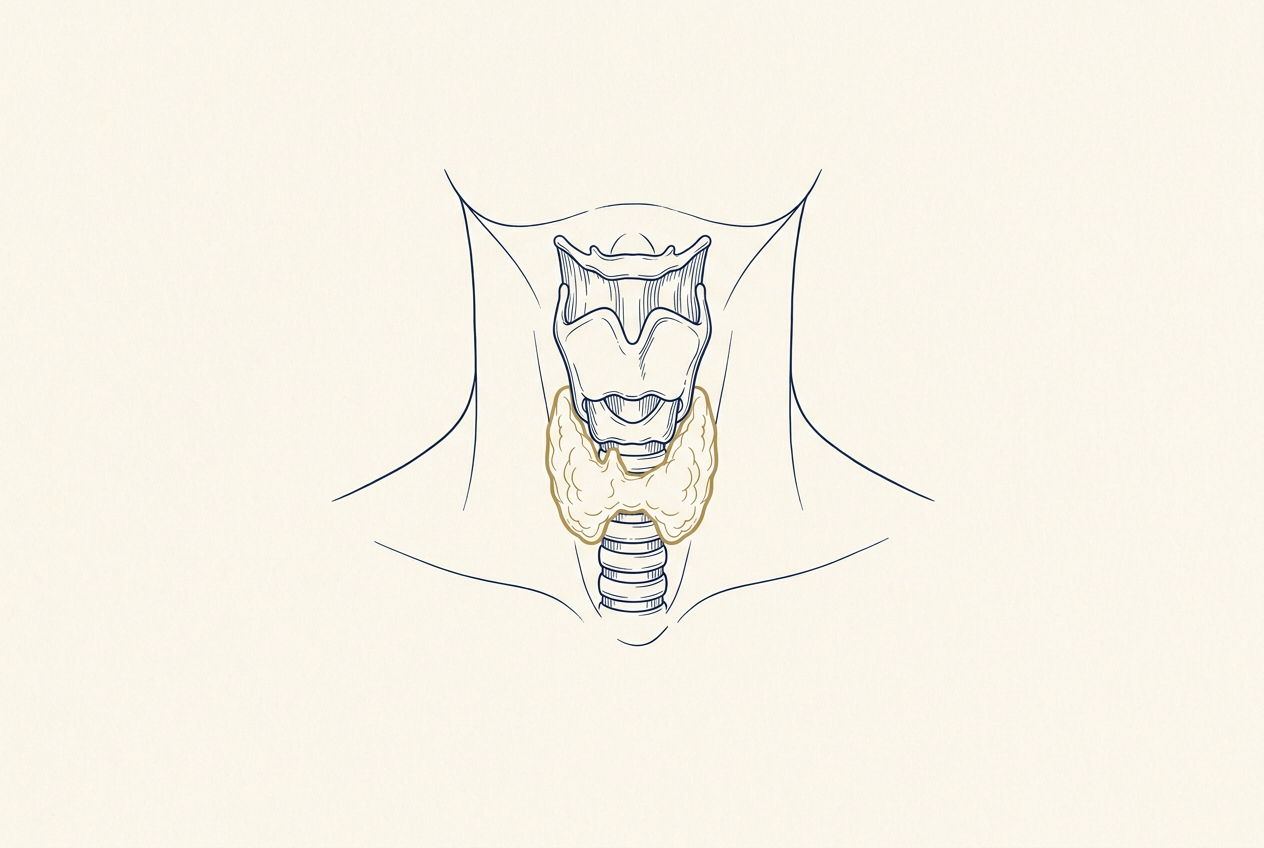
Veterans granted 30 percent for hypothyroidism often treat the award letter as the end of the claim. Under DC 7903 it is a six month clock: when it runs out, VA re-rates on residuals alone, and a record that says only controlled on levothyroxine collapses to nothing. The six month window is the evidence phase, and every residual documented in it can become its own rating.
What this playbook covers
This guide is about building and protecting the claim. If you want the rating criteria themselves, the two tier table, and the current percentages, see our reference page: Hypothyroidism VA disability rating. Here we cover the part a criteria table cannot tell you: what to document, when to document it, and how to turn a modest looking diagnostic code into the combined rating the evidence actually supports.
Hypothyroidism is rated under diagnostic code 7903 (38 CFR 4.119) with exactly two time limited levels: 30 percent without myxedema, and 100 percent with it. Both are six month clocks, and what happens after the clock runs out is decided almost entirely by the record you build now.
Step 1: Pick your service connection route
There are two main routes into service connection:
- Direct: symptoms or an abnormal TSH documented in or near service. Most hypothyroidism in veterans traces to Hashimoto's thyroiditis, an autoimmune attack on the gland; it is rated as the hypothyroidism it produces, so the autoimmune label does not change the code.
- Secondary under 38 CFR 3.310: the route most veterans miss is medication. Amiodarone, prescribed for service-connected heart conditions such as atrial fibrillation, and lithium, used for service-connected mood disorders, are two of the best documented drug causes of hypothyroidism, and they are not the only ones. If you take long term medication for any service-connected condition, ask your treating physician whether the drug carries thyroid effects and get the answer in writing. That one document can carry the entire nexus.
Step 2: Use the six month window to build the record
Once service connection is granted, the 30 percent runs for six months after the initial diagnosis (the 100 percent for myxedema runs six months past the date an examining physician finds the crisis stabilized). Veterans treat this window as a victory lap. It is actually the evidence gathering phase, because when it closes VA schedules an examination and re-rates the condition on residuals alone.
"Controlled on levothyroxine" still commonly leaves fatigue, cold intolerance, slowed thinking, depression, constipation, weight change, and bradycardia. Every one of those belongs in a treatment note, by name, before the follow-up exam. A symptom that is not in the record does not exist at rating time.
Step 3: Claim every residual by name
This is where the two level structure stops being stingy. After the initial period, each documented residual gets its own rating under its own body system, and they combine under 38 CFR 4.25:
- Depression or cognitive slowing rates under the mental disorders formula (38 CFR 4.130).
- Cardiac effects rate under the cardiovascular schedule (38 CFR 4.104).
- Digestive effects rate under 38 CFR 4.114.
- Thyroid related eye involvement (such as exophthalmos, blurred vision, or double vision) is separately evaluated under the eye schedule in 38 CFR 4.79 by Note 3 to DC 7903, for example diplopia under DC 6090.
Do not assume VA will hunt for these. Claim each residual explicitly, as a residual of the service-connected hypothyroidism, and point to the treatment notes you built in Step 2. Those separate ratings combine and can exceed the old single endocrine number.
Step 4: Protect the rating when the clock runs out
If compensation is already being paid, any reduction after the six month period must follow the notice and response procedures of 38 CFR 3.105(e): you receive advance notice and a chance to respond before a reduction takes effect. A proposed reduction is not a decision; it is an invitation to submit the residual documentation you have been building. Respond with it.
The evidence checklist
- The TSH and lab history, as far back as it goes. Lab trends date the onset, which drives the effective date and back pay.
- Any hospitalization records for a thyroid crisis. Myxedema is defined by its cluster (cold intolerance, muscular weakness, cardiovascular involvement, and mental disturbance), and records documenting that combination are what support the 100 percent level.
- Treatment notes naming each residual, entered before the follow-up exam.
- The written medication opinion if you are claiming secondary to a prescribed drug.
Common mistakes that cost money
- Walking into the follow-up exam with an empty record, then losing the rating to "asymptomatic on medication."
- Never claiming depression or cognitive slowing, the residuals most often left undocumented.
- Missing the Note 3 eye rule: documented eye involvement is an additional rating, not part of the 30 percent.
- Treating weight gain as the claim. Weight gain by itself is not a rating, but what it aggravates (sleep apnea, joint disease) can support secondary claims with a medical opinion.
- Ignoring a proposed reduction instead of responding with evidence under the 38 CFR 3.105(e) procedures.
Related on this site
- Hypothyroidism VA disability rating, the criteria reference
- How VA rates mental disorders (38 CFR 4.130)
- Secondary service connection, explained
- Combined VA ratings and the 10 percent rule
- How VA rates atrial fibrillation (DC 7010)
Common questions
What happens after the six month hypothyroidism rating ends?
VA schedules an examination and re-rates the condition based on residual effects alone. Each documented residual, such as depression, cardiac effects, or digestive problems, is rated under its own body system, and the separate ratings combine under 38 CFR 4.25. If compensation is already being paid, any reduction must follow the notice and response procedures of 38 CFR 3.105(e).
Can hypothyroidism be service connected because of medication?
Yes, under 38 CFR 3.310. Amiodarone, prescribed for service connected heart conditions, and lithium, used for service connected mood disorders, are two of the best documented drug causes of hypothyroidism, and other medications can qualify too. A written opinion from the treating physician that the prescribed drug carries thyroid effects can serve as the nexus.
What evidence matters most in a hypothyroidism claim?
The TSH and lab history, which dates the onset and drives the effective date; treatment notes naming each residual before the follow-up exam; hospitalization records for any thyroid crisis; and a written medication opinion for secondary claims.
Does thyroid related eye involvement add to the rating?
Yes. Note 3 to diagnostic code 7903 directs that documented thyroid related eye involvement, such as double vision or blurred vision, is separately evaluated under the eye schedule in 38 CFR 4.79. It is an additional rating, not part of the 30 percent.